Underage Drinking and Driving
Underage drinking and driving is a serious and preventable risk that affects teens, families, and communities. Because teens have less driving experience and are still developing essential judgment and decision-making skills, any amount of alcohol can significantly increase their chances of causing a crash. This guide explains the laws, risks, and steps families can take to help keep young drivers safe.
What Are the Legal Consequences of Underage Drinking and Driving?
Underage drinking and driving is extremely dangerous and puts both the driver and everyone on the road at risk. Beyond the safety issues, teens who drink and drive can also face significant legal consequences that affect their driving privileges, education, and future opportunities..
Zero-Tolerance Laws and the Legal Drinking Age
Zero-tolerance laws make these consequences even stricter for minors. While the legal blood alcohol content (BAC) limit for adults is .08%, most states set a .02% or lower limit for underage drivers. Even small amounts of alcohol can result in legal consequences, including license suspensions and administrative penalties through the state motor vehicle department.
DUI/DWI Laws Specific to Minors
While zero-tolerance laws determine when a minor can be penalized for having alcohol in their system, DUI and DWI laws govern the criminal offense of impaired driving. A minor does not need to exceed the zero-tolerance threshold to face a DUI charge. Officers may issue a DUI charge if a teen appears impaired.
Law enforcement officers evaluate more than BAC when assessing impairment. Many states allow DUI or DWI charges for minors who show signs of being under the influence of alcohol, marijuana, prescription drugs used improperly, or illegal substances. Some states also impose enhanced penalties for situations involving test refusal, passengers, property damage, or drug impairment.
Potential Charges and Fines
When an underage driver is stopped and found to be impaired, the penalties can be both immediate and long-lasting. Even a first offense can trigger administrative penalties through the state motor vehicle department and criminal charges through juvenile or adult court, depending on the state and the severity of the incident.
Underage drivers may face consequences such as license suspension, fines, probation, mandatory alcohol-education programs, or community service. Some states also require an ignition interlock device for DUI convictions, even for minors. In more serious cases, such as repeat offenses, high BAC levels, drug impairment, or causing a car accident while impaired, penalties may include longer suspensions, misdemeanor or felony charges, or detention.
Social and Psychological Factors Behind Teen Drinking and Driving
Teen drinking and driving does not happen in a vacuum. Social pressures, emotional development, and online influences all play a role in the choices teens make around alcohol. Understanding these factors can help parents recognize risks early and support teens in making safer decisions.
Peer Pressure and Social Influence
Teenagers are highly influenced by the behaviors and beliefs of their peers. Research consistently shows that teens are more likely to experiment with alcohol when their friends do. Seeing a friend drink or drive after drinking can make these behaviors seem normal, even when teens recognize the danger. When risky choices become common among their friend groups, teens may feel pressure to participate in order to fit in, avoid judgment, or maintain social status.
The Role of Social Media
Social media can intensify these pressures. Teens may see posts or videos that portray drinking as fun or harmless, which can make unsafe behavior seem normal. Viral challenges and alcohol-related content can encourage risky decisions, including getting into a car with someone who has been drinking or trying to drive themselves. Talking with teens about these online influences can help them recognize unsafe situations and make safer choices.
What Are the Signs Parents Should Look Out For?
As teens gain independence behind the wheel, parents play a crucial role in recognizing early signs of underage drinking or risky behavior. Paying attention to behavioral, physical, and social changes can help families intervene before problems escalate.
Behavioral Signs
Notice patterns such as sudden mood swings, irritability, secrecy, or declining academic performance. These changes do not always mean a teen is drinking, but they can signal stress, peer pressure, or coping challenges that deserve attention and open conversation.
Physical Signs
Physical signs of alcohol or drug use may include the smell of alcohol, glazed or bloodshot eyes, slurred speech, coordination issues, or abrupt changes in energy levels or sleep patterns.
Social Changes
Teens may begin spending time with new friends, withdraw from family activities, or lose interest in hobbies they once enjoyed. Sudden schedule changes, unexplained outings, or inconsistencies in stories can also be signs that your teen is struggling with peer influences or experimenting with substances.
Keeping open communication with your teen is one of the most effective protective factors. Creating space for honest conversations, listening without immediate judgment, and reinforcing that safety comes first can help your teen feel supported in making responsible choices.
What Are the Health and Safety Risks of Underage Drinking and Driving?
Underage drinking and driving puts teens, passengers, and everyone on the road at immediate risk. Because young drivers have less experience behind the wheel, adding alcohol significantly increases the likelihood of losing control of the vehicle, misjudging distances, or failing to react in time to avoid a crash. These accidents can result in severe injuries, permanent disabilities, or fatalities.
The impact does not end at the scene of a crash. Teens who experience or cause an impaired-driving accident may face lasting physical pain or mobility issues, along with significant emotional and psychological stress. Feelings of fear, guilt, anxiety, or depression are common after a serious accident, and some teens develop post-traumatic stress, especially when the crash involves injuries or loss of life.
These incidents affect far more people than the teen behind the wheel. Families, friends, and victims may face long recovery periods, emotional trauma, and financial strain as a result of the crash. The ripple effect can touch entire communities, leaving lasting grief, fear, or disruption long after the event itself.
Prevention Strategies for Underage Drinking and Driving
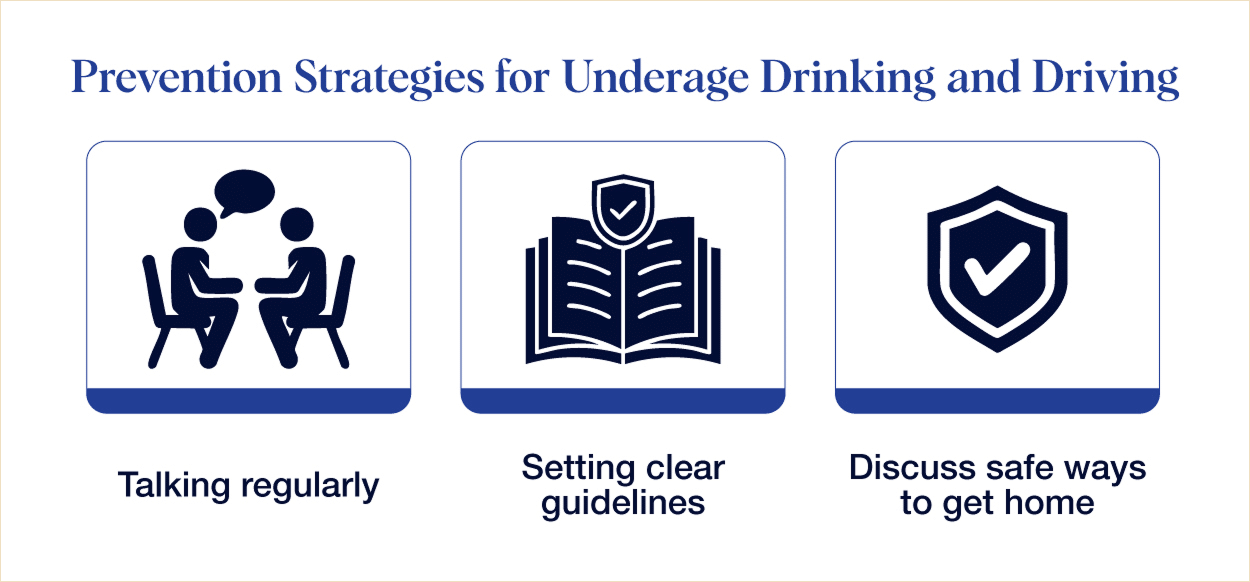
Parents have a powerful role in helping teens avoid impaired driving. Open, ongoing conversations about alcohol and driving can help teens understand the risks and feel supported in making safe decisions. Talking regularly about expectations, responsibilities, and real-life consequences reinforces the message that safety comes first.
Setting clear guidelines for driving can also reduce risky behaviors. Many families use a written driving agreement that outlines responsibilities, curfews, passenger limits, and rules about alcohol. Research shows that teens are less likely to engage in dangerous driving behaviors when their parents establish firm, consistent expectations and follow through with consequences.
It’s also important to give teens practical alternatives so they never feel trapped into driving after drinking. Discuss safe ways to get home, such as calling a parent or trusted adult, using a designated driver, or relying on ridesharing when appropriate. Reinforcing that their safety comes first—and that you would rather they call for help than make a dangerous choice—can reduce the likelihood of impaired driving.
What to Do if Your Teen Is Caught Drinking and Driving?
If you learn your teen has been drinking or suspect they may have driven after drinking, begin with a calm conversation. Ask what happened, listen closely, and try to understand the pressures or emotions that influenced their choices. Understanding the reasons behind the behavior helps you respond effectively.
After discussing the situation, set clear expectations and appropriate consequences. You may decide to limit driving privileges, review transportation rules, or involve your teen in alcohol education or counseling if needed. Reinforcing why drinking and driving is dangerous helps prevent future incidents.
If your teen has been stopped or charged for drinking and driving, contact an attorney promptly. Underage DUI cases can affect driving privileges, insurance rates, school activities, and a teen’s long-term record. Legal guidance can help protect your teen’s rights while you focus on addressing the behavior and supporting them through the process.
Take Action Today to Protect Your Teen from Underage Drinking and Driving
Young drivers already face a higher risk of accidents due to inexperience, and adding alcohol makes driving significantly more dangerous. Underage drinking contributes to a notable number of alcohol-related traffic deaths each year, showing how important early prevention is.
Parents can model safe choices by never driving after drinking and by checking in regularly about where teens are going and how they plan to get home. Reinforcing safe alternatives, such as calling a parent, using a rideshare service, or arranging a sober ride, can help teens feel more prepared to make responsible decisions.